

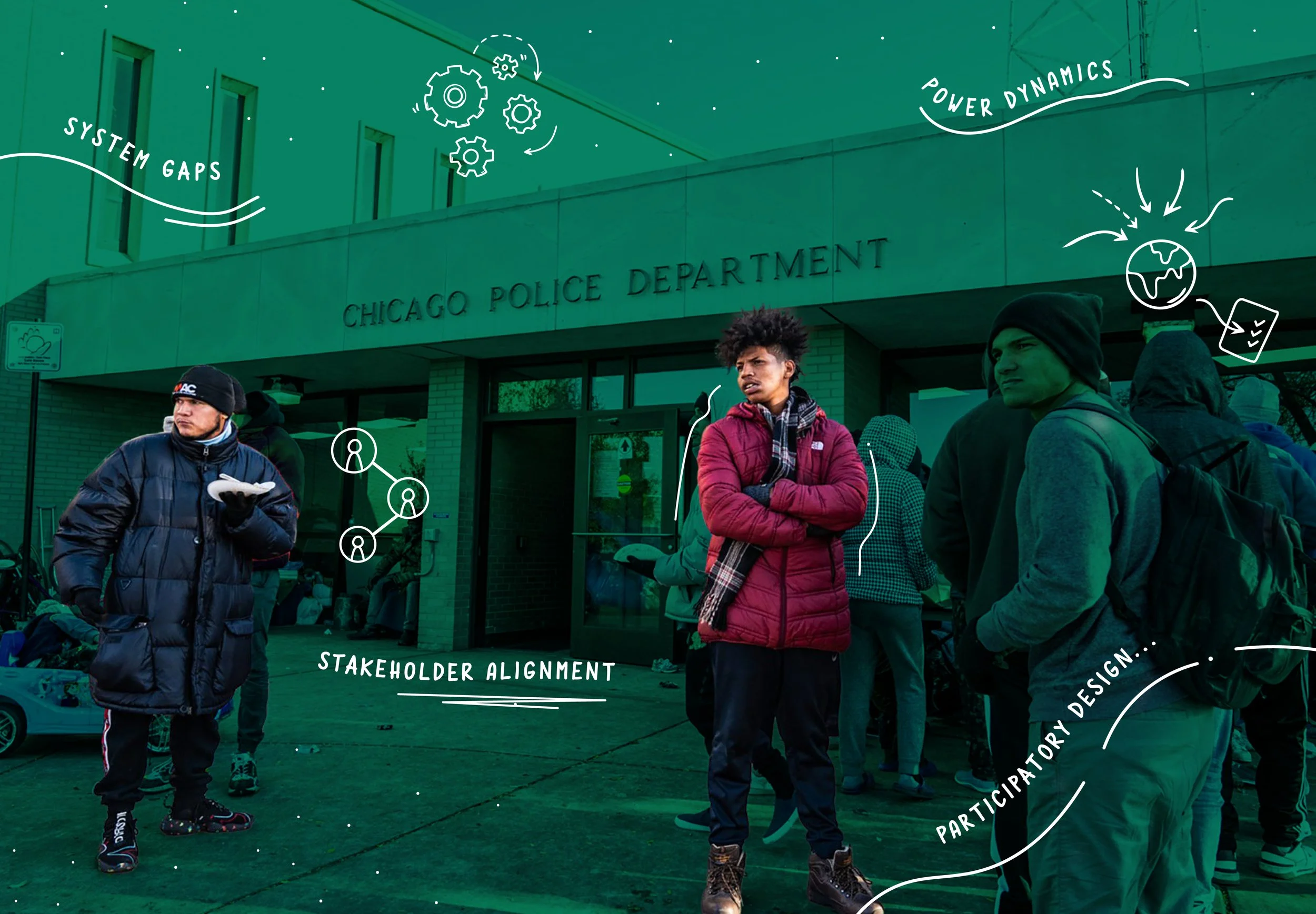
project context
In early 2024, the Khoj Lab team, in collaboration with the Institute of Design (ID) at Illinois Tech faculty and graduate students, launched a project to address the migrant "crisis" in Chicago using a design-led systems perspective. Since Aug 2022, over 35k migrants, primarily from Venezuela, arrived in Chicago, with over 13k living in city shelters as of Jan 2024. The city spent $255M on support in 2023 but faced significant challenges, including a 69% voter disapproval rate regarding the crisis management and tensions in disinvested Black and brown communities.
Client challenge
When Chicago's migrant influx exposed deep cracks in care, coordination, and equity, the city faced a hard question: how do you support new arrivals without leaving long-time residents behind?
Project Scope
Type of Engagement
Social Impact, Systems Design
Time-frame
8 weeks
75 hrs
Data Collection, Workshop
200 hrs
Analysis, Recommendations & Story building
-
Virtual Expert Interviews
Stakeholder Interviews
User Interviews
Pre-work Activity
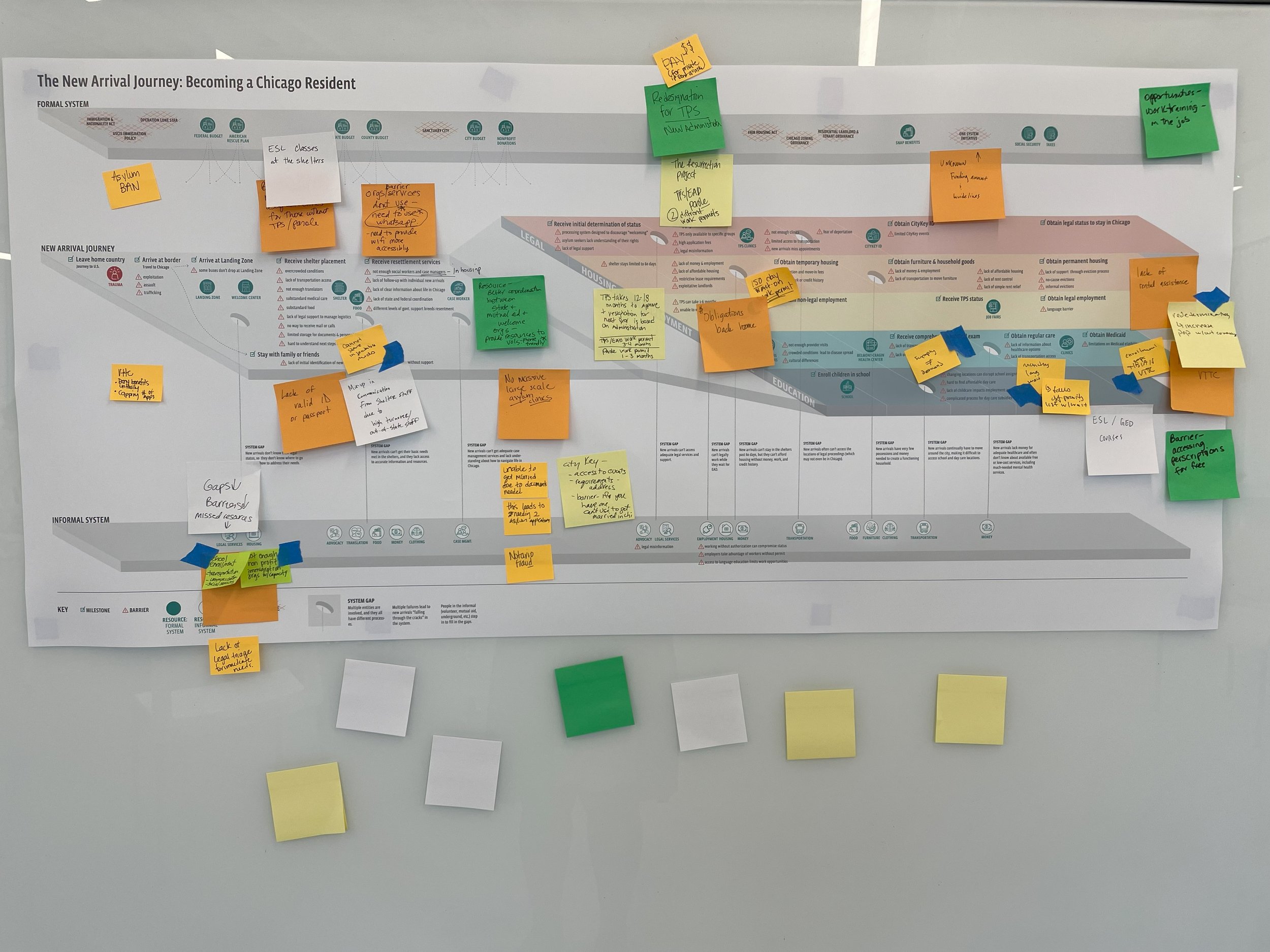
Journey Mapping
Observation pictures -
Khoj Lab Team
Senior Design Strategist
Senior Design Researcher
Communication Designer
Design InternsClient Team
Government Officials
Social Organizations
Institute of Design, IIT -
Design Methods Used:
User Profiles
User Journey Mapping
Ecosystem MapResearch Methods:
Virtual Expert Interviews
Pre-work Activity
In-Home Visits + InterviewsCommunication Methods Used:
Diagrams & Visualizations
Virtual Presentation
KHOJLAB APPROACH
A participatory systems research and co-design approach to understanding and improving the new arrivals ecosystem.
Research and Synthesis:
We conducted 22 in-depth interviews with a diverse set of stakeholders, including new arrivals, volunteers, community leaders, and representatives from legal, healthcare, social services, and government organizations. This primary research was complemented by participation in city briefings, secondary research, and direct service through volunteering at legal clinics, allowing for both observational and embedded insights.
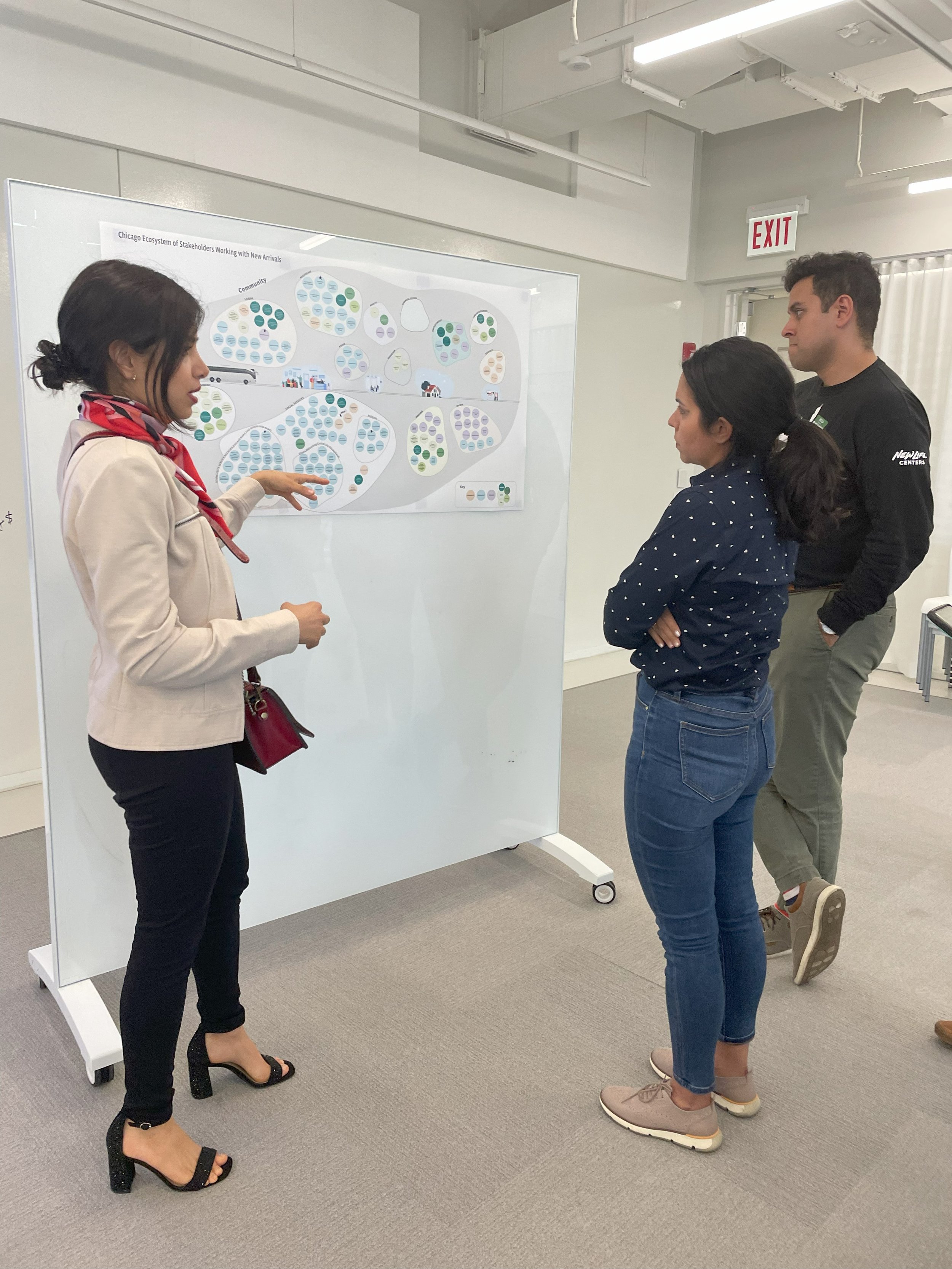
Findings were synthesized into a set of systems-level artifacts, including ecosystem maps to visualize institutional relationships, journey maps to capture lived experiences across key touchpoints, and a comprehensive synthesis document identifying systemic gaps, pain points, and opportunity areas.
Workshops and Co-Creation:
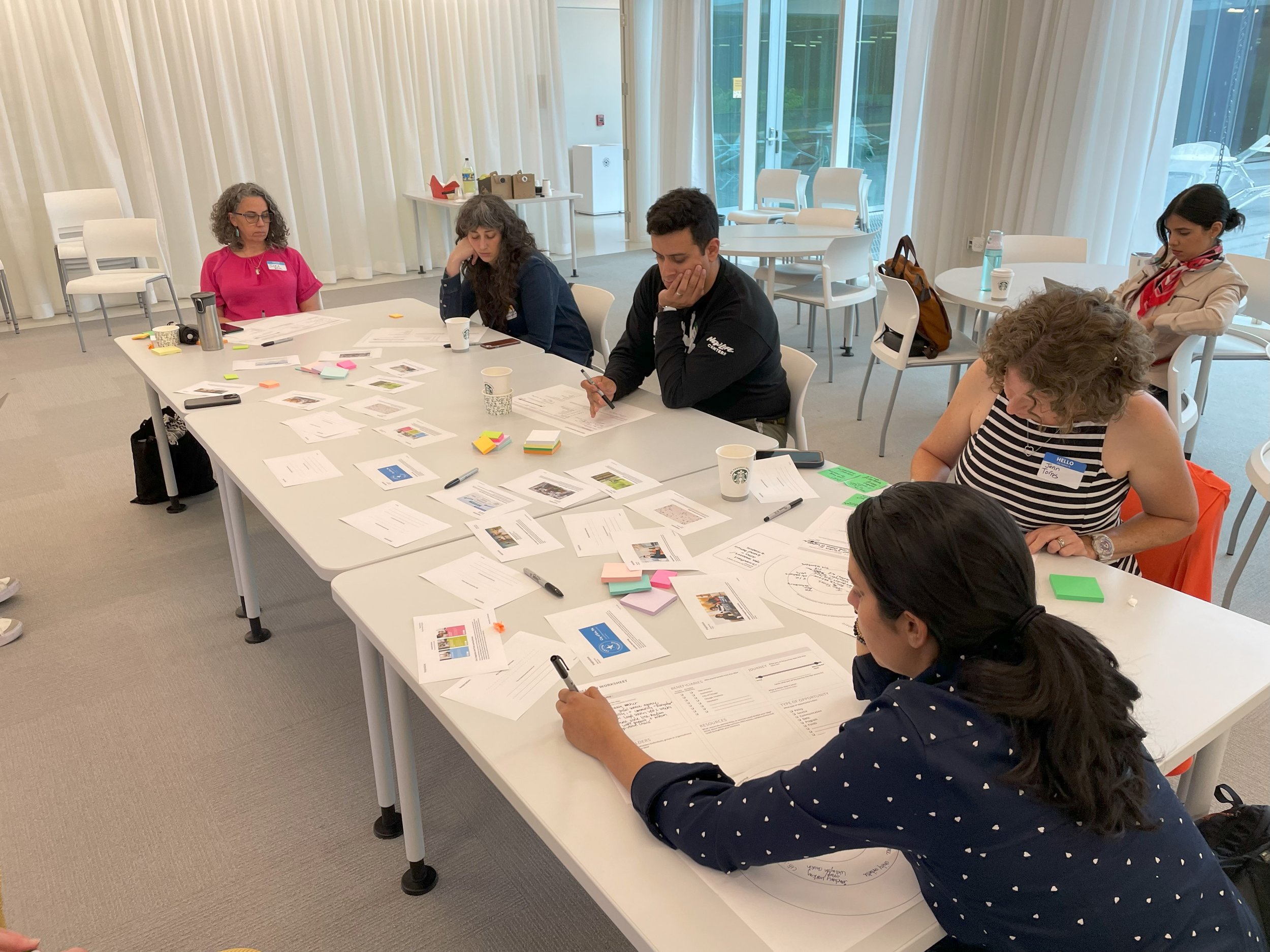
Building on these insights, we designed and facilitated a series of workshops with key stakeholders and influencers to validate findings, identify leverage points, and co-create solutions.
The first workshop, “Immediate Needs” (February 2024, IIT Institute of Design), focused on surfacing urgent challenges and aligning stakeholders around priority areas.
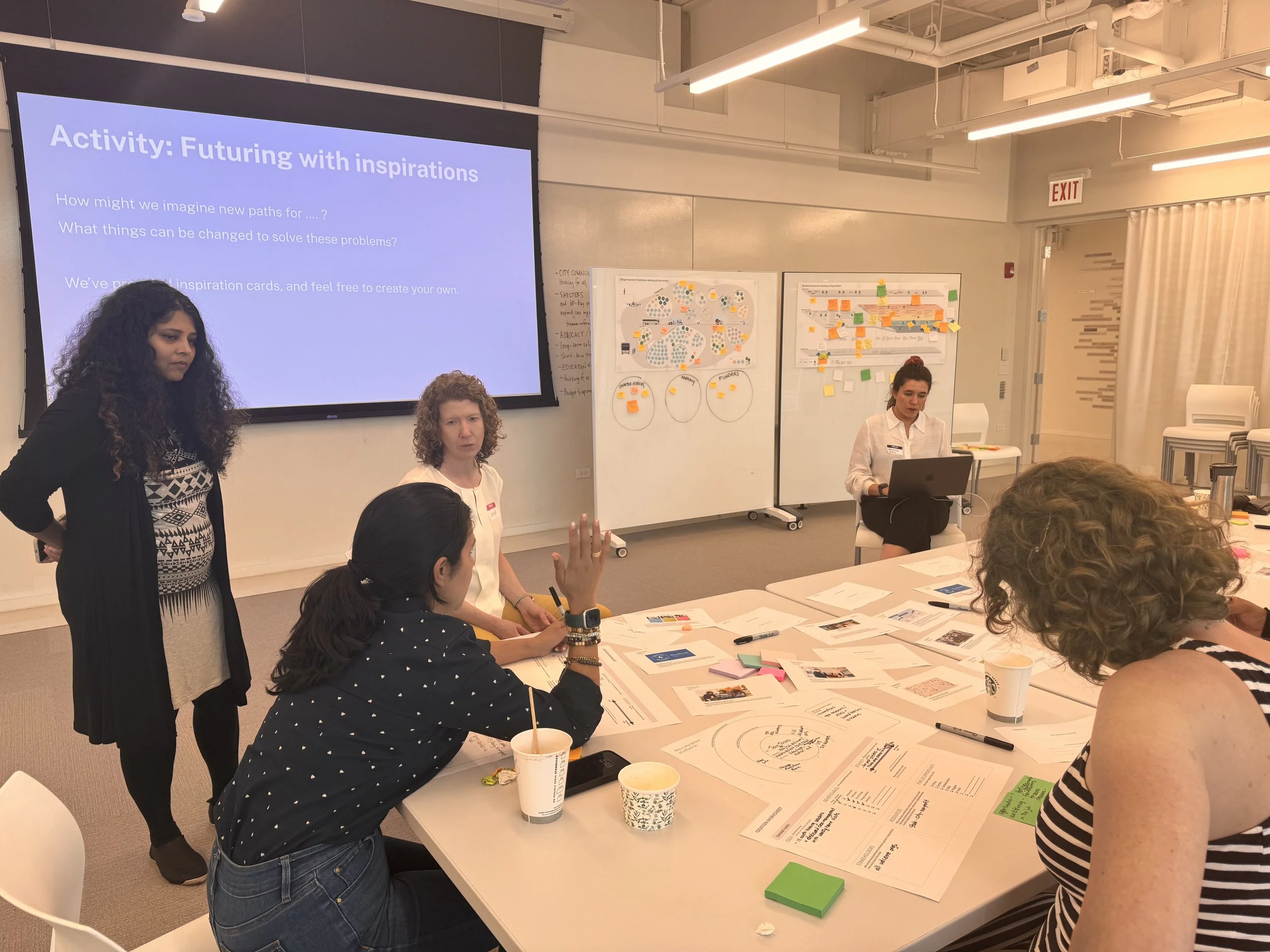
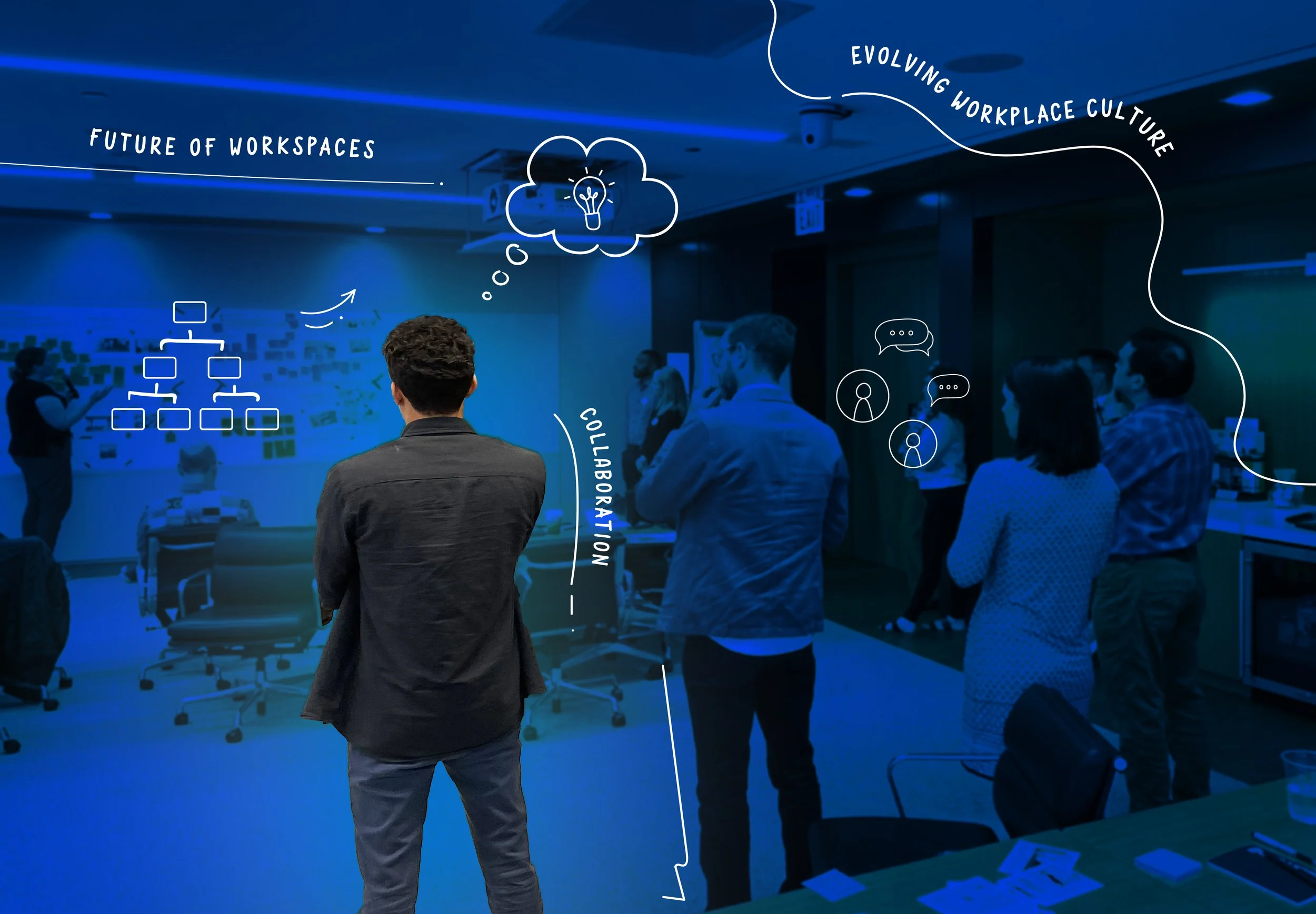
A subsequent New Arrivals Systems Workshop (May 13, 2024) expanded into systems thinking and future-oriented ideation. Activities included ecosystem and journey mapping exercises, followed by a futuring session using inspiration prompts to generate bold, actionable concepts.
These sessions produced a range of ideas spanning policy, service delivery, and community-based interventions, including 12-month housing vouchers, a faith-based “Church Adoption” resettlement model, and enhanced case management infrastructure.
IMPACT/OUTCOME
The insights and engagement culminated in a Systems Workshop where participants generated several "seeds" for solutions.
The project successfully used systems thinking to visualize the complexity of the migrant influx, moving the focus from symptoms (tents/shelters) to underlying systemic issues (policy, data transparency, and resource coordination). The outcomes provided a framework for future collaborative problem-solving between the public and private sectors in Chicago.
Key Insights & Findings:
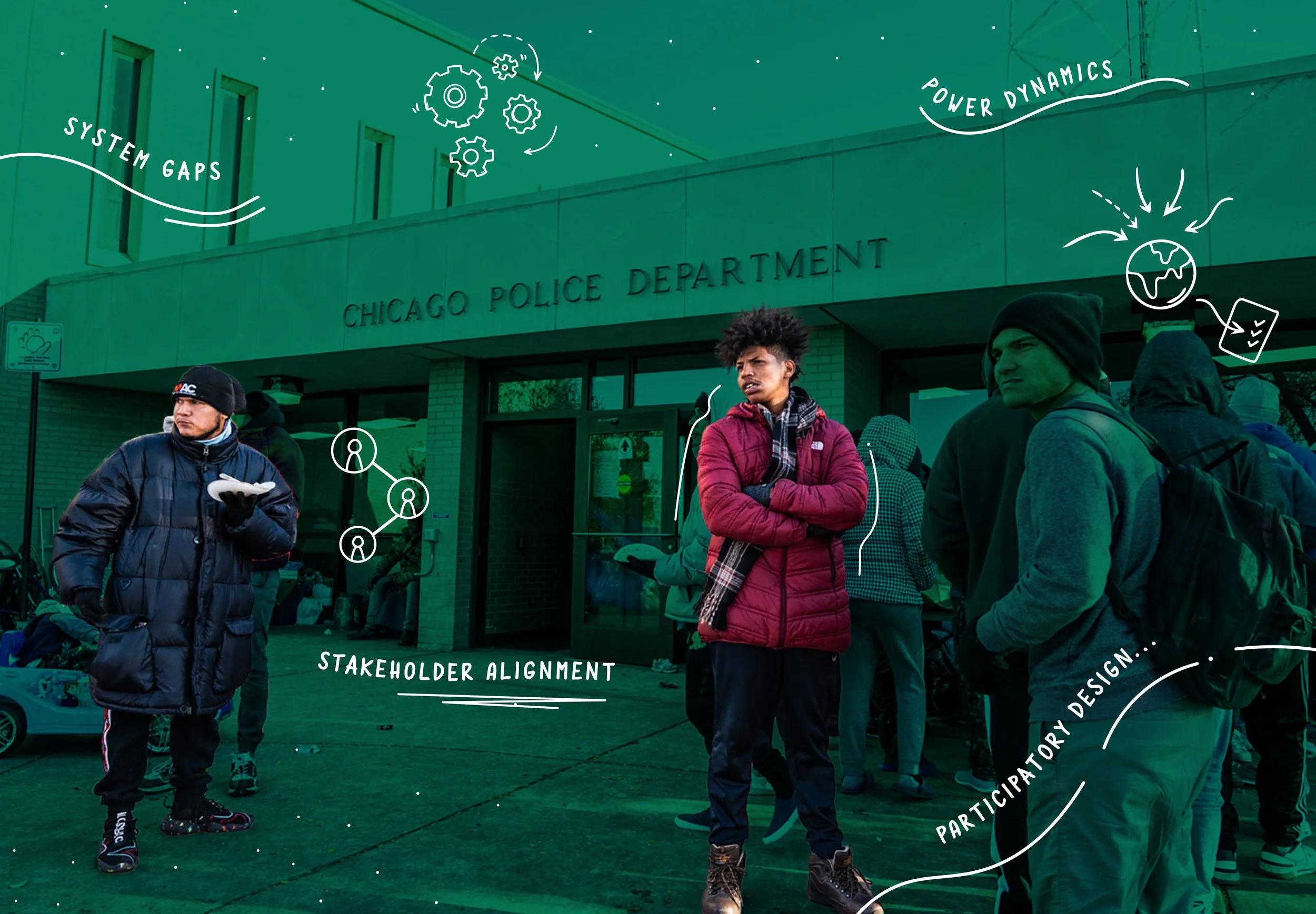
System Gaps: Critical failures were identified in legal access (misinformation and asylum delays), housing (lack of affordable options and 60-day shelter limits), and healthcare (mismatch between clinic locations and the distribution of new arrivals).
Power Dynamics: Stakeholder connections are not neutral; they are embedded with multidimensional tensions and emotions.
Narrative Shift: Experts suggested reframing the "crisis" as an opportunity, viewing migrants as economic and social assets rather than burdens.
An automotive terminal facility sought to modernize and optimize its vehicle inspection process, improving both customer experience and internal operational efficiency. The Smart Automotive Terminal application was developed collaboratively by a technology provider and a rail operator to enable real-time vehicle inspections, data collection, and streamlined workflows for vehicles categorized as cleared, damaged, or routed for repair.